
Last updated November 25, 2026
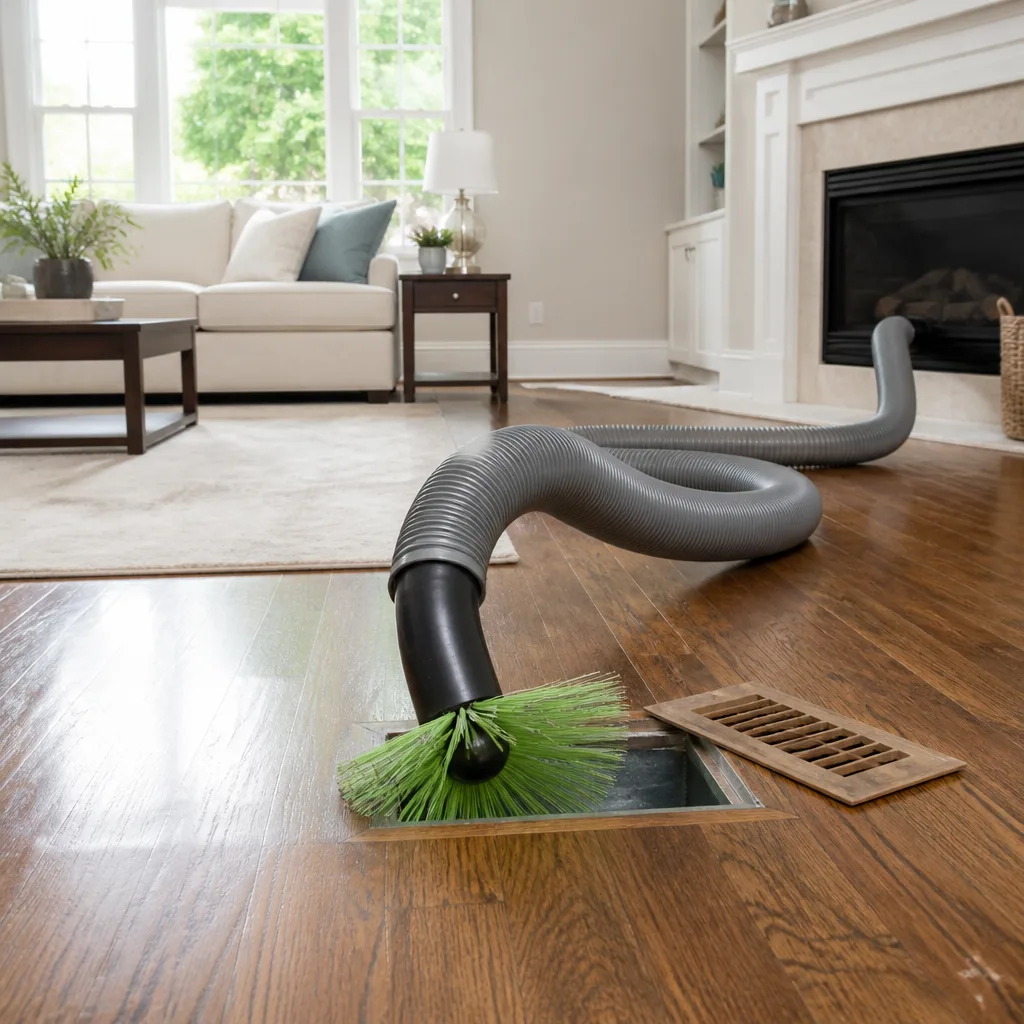 Whole-home duct cleaning
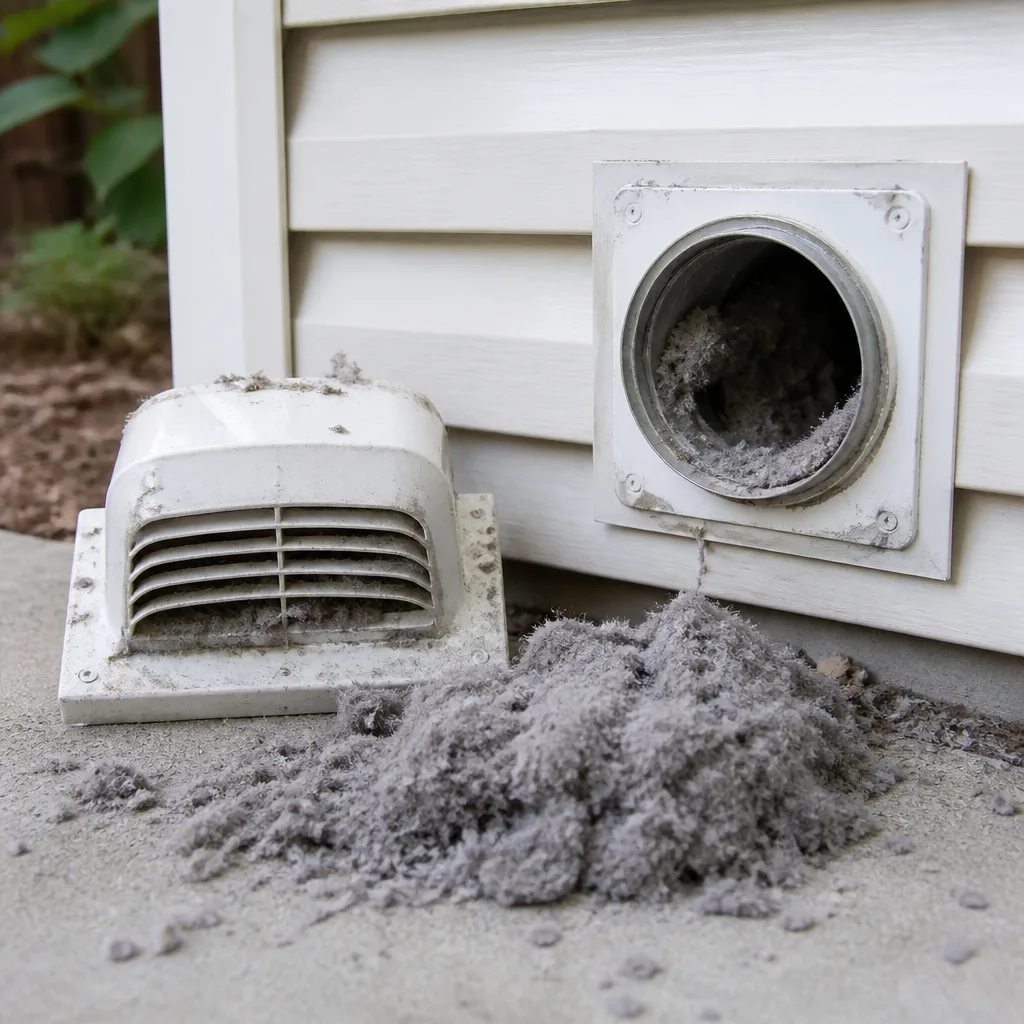 Dryer vent cleaning
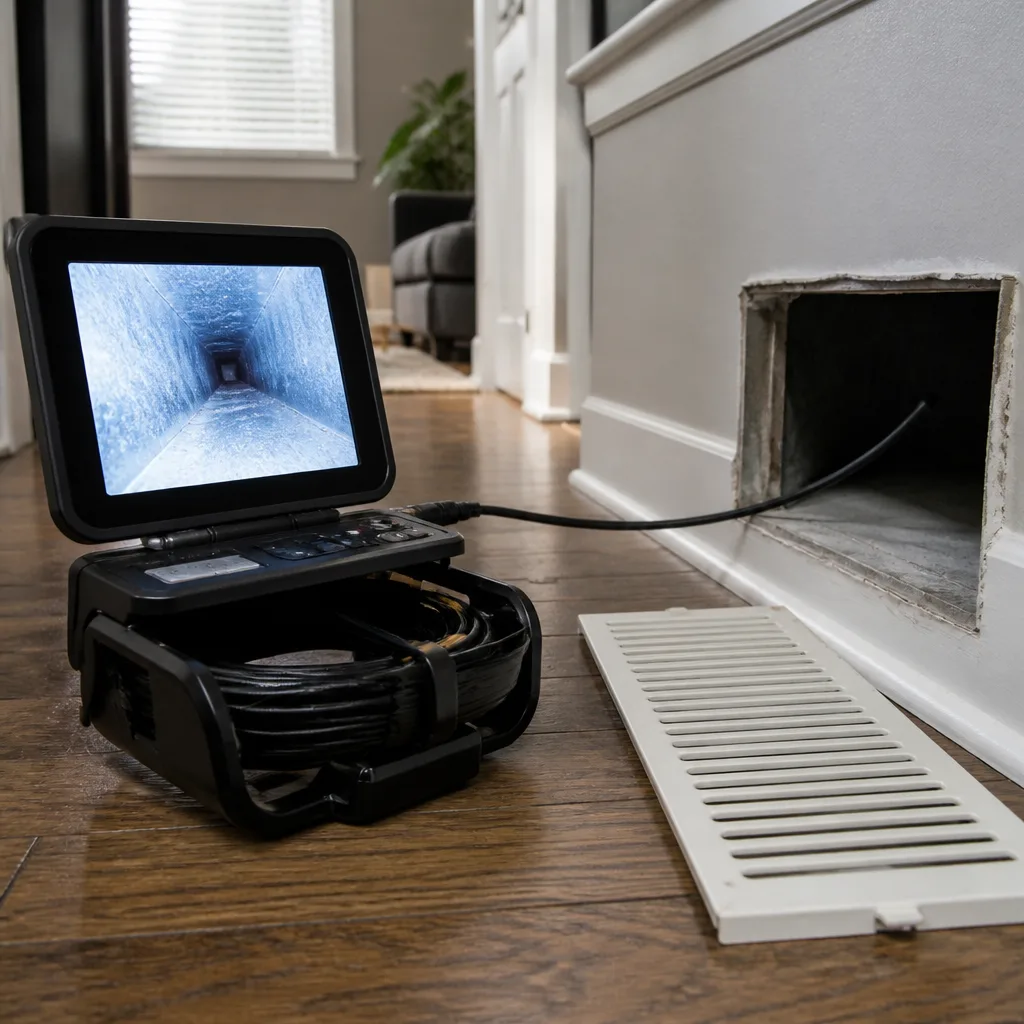 Camera inspection
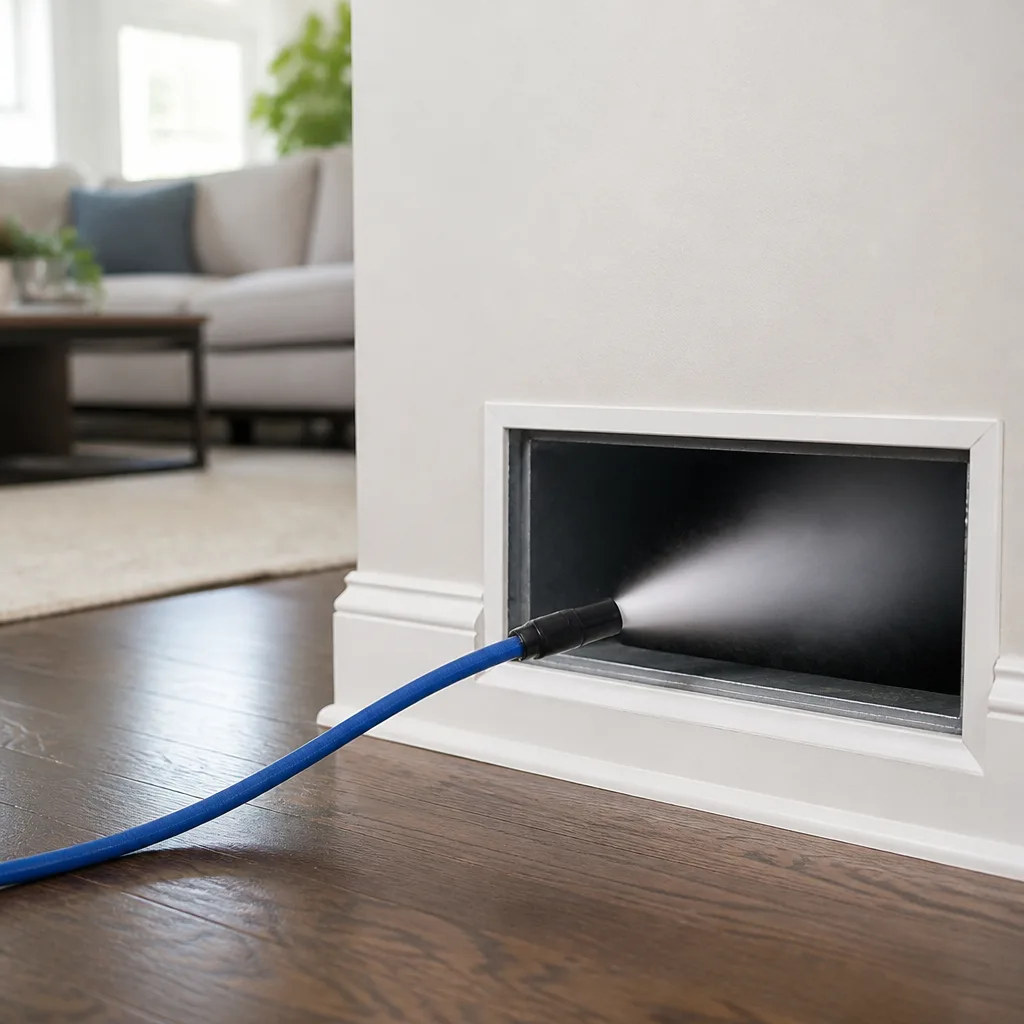 Sanitizing & deodorizing
Whole-system duct and dryer vent check with before-and-after photos - you see exactly what came out of your vents
That "$99 whole-house special" is a bait ad - the real number appears once they are in your hallway, or the "clean" is a shop-vac at the register. We photograph the inside of your ducts before and after instead.
Air Duct Cleaning Warning Signs: A Myers Park Homeowner’s Reference Guide
By the time you can see dust blowing from a register, the contamination load inside that duct system has typically been accumulating for years. Visible discharge is a late signal, not an early warning. That’s the uncomfortable truth most cleaning companies won’t tell you, because it’s easier to sell a cleaning once the problem is obvious. This guide takes the opposite approach. It teaches Myers Park homeowners to read the subtle, early indicators that a duct system is degrading before the obvious symptoms arrive: filters that load faster than they should, rooms that drift a couple of degrees off the rest of the house, dust returning to horizontal surfaces near supply vents. You’ll learn what to inspect, how to interpret what you find, and when a pattern warrants professional assessment.
Quick Answer
The earliest warning signs of a degrading duct system are filters that load faster than expected, consistent temperature or airflow differences between rooms, dust settling on surfaces near supply registers, and dust puffs when the system starts. Visible dust blowing from a register, persistent musty odors, and health symptoms that track HVAC run times are late-stage indicators. In a Myers Park home, climate and older housing stock both accelerate these patterns, so early signals are worth acting on.
Styles & brands we work with
- Whole-home duct cleaning
- Dryer vent cleaning
- Camera inspection
- Sanitizing & deodorizing
Table of Contents
- Early-Stage Warning Signs You Can Spot Before the Obvious Symptoms
- How to Inspect Your Accessible Ducts with a Flashlight and Phone
- Musty Odor at Startup Versus a Persistent Biological Smell
- Reading Allergy and Respiratory Patterns Against HVAC Run Times
- Post-Renovation Debris Versus Organic Contamination
- Why Myers Park Climate and Housing Make These Signs Matter
- When a Signal Means Professional Assessment
- Common Mistakes to Avoid
Early-Stage Warning Signs You Can Spot Before the Obvious Symptoms
The problem with the standard warning-sign list is that it describes a system already far along. If a homeowner is told to look for clouds of dust from a vent, they’ve already missed the useful window for a smaller, more contained intervention. In our experience on air duct cleaning jobs, the earlier a pattern is caught, the less accumulation has to be addressed.
Here are the signals that appear first:
- Filter loading faster than your normal rhythm. If you used to change the filter every three months and now it looks loaded at six weeks, something is feeding the filter a heavier particle load. A dirty return path, a filter that’s too restrictive for the blower, or a leak pulling in attic air can all do this. The filter is doing its job; it’s the upstream condition you need to read.
- One or two rooms that never quite match the house. A little temperature drift is normal, but a bedroom or a corner office that’s consistently warmer or cooler than the rooms around it often signals restricted or unbalanced airflow in that branch.
- Dust on horizontal surfaces near supply vents, not everywhere. Dust settles everywhere. When it concentrates on the tops of door frames, window ledges, and shelf tops closest to a supply register, the supply path is a likely source.
- A short dust puff at startup. Most systems give a slight puff when the blower spins up. A more noticeable puff, one you can see out of the corner of your eye, suggests loose material sitting in the duct that’s being lifted at higher velocity.
- A faint smell that appears only when the system runs. This is an early sign worth watching, because a smell tied to airflow points at the air pathway itself rather than the room.
None of these signals, alone, proves the ducts need cleaning. What matters is the pattern. Two or three of them appearing together, particularly in a home that hasn’t had its air pathway reviewed in years, is the point at which professional assessment saves more than it costs.
How to Inspect Your Accessible Ducts with a Flashlight and Phone
You don’t need to dismantle anything to get useful visual information from your own duct system. A bright flashlight and a phone camera get you further than most homeowners realize. The goal is not to clean anything; it’s to see what’s in there and whether the pattern looks like settled dust, organic growth, or construction debris.
Follow these steps carefully. Work from the register inward, and don’t reach into any duct you can’t see clearly.
- Turn the system off. This prevents the blower from circulating anything while you inspect and keeps the duct from pulling in debris from the room.
- Remove one supply register and one return register you can reach safely. The return is often the more informative of the two, because it carries the heavier return-air load.
- Shine a flashlight into the opening and photograph what you see. Use your phone camera’s flash and zoom. Look for a visible film, mats of material, dark staining, or debris that shifts when you tap the duct gently.
- Look for what’s settled on the duct floor and walls. Settled dust is expected. Material that looks fluffy, matted, or visibly textured indicates accumulation beyond routine settling.
- Note the color and consistency. Gray or light dust is typical. Darker material, especially where it looks slightly moist, deserves professional assessment rather than a hobbyist cleaning.
- Reinstall the register firmly and turn the system back on. Don’t leave the duct open while the blower is running.
A word of caution: many homes in Myers Park have duct runs in tight attic space, and some older homes have ducts partially concealed in wall cavities. Don’t climb into an attic you can’t move safely in, and don’t remove panels from the air handler to inspect the coil. That’s work for a trained technician. If you want confirmation on the internal condition, professional inspection with the right equipment will see what your phone camera can’t.
Musty Odor at Startup Versus a Persistent Biological Smell
Not every smell from a register is a warning sign, and mistaking one for the other creates a lot of unnecessary worry. A faint odor that appears for the first sixty seconds or so after startup and then fades is common. So is a slight smell after long periods of disuse. What matters is the persistence and the character of the smell.
Startup odor, usually not a warning:
- Appears only at startup and disappears within a minute or two.
- Has a slightly flat or mildly dusty character.
- Shows up after the system has sat unused for a stretch, then settles back to normal.
Persistent odor that warrants assessment:
- Continues through the entire run cycle, not just the opening seconds.
- Has a distinctly musty, earthy, or biological character, rather than dust.
- Appears specifically in certain rooms or branches, rather than the whole house.
- Intensifies in humid weather.
The distinction matters because a startup odor can often be addressed with filter maintenance and a return-path review. A persistent biological smell usually points at organic growth somewhere in the air pathway, which is a contamination situation requiring more than a routine cleaning. Our approach on those jobs is to run HVAC cleaning across the full air pathway, use negative-pressure extraction so contamination isn’t pushed into living spaces, and follow with a sanitizing treatment using Guardsman products through a contact-time protocol. That’s a defined sequence, not a spray-and-hope response. If you are smelling something persistent, don’t guess at the cause. Get someone with the right equipment to assess it.
Reading Allergy and Respiratory Patterns Against HVAC Run Times
Household allergy and respiratory symptoms can be a late indicator, but the timing of those symptoms relative to HVAC operation is more useful than most people realize. If symptoms track the system, the air pathway deserves a serious look. If they don’t track the system at all, other sources are probably at play.
Here’s how to read the pattern:
- Symptoms that improve when the system is off. If nose, throat, or eye irritation eases on days when the system runs less, the air pathway is a candidate source.
- Morning congestion that resolves after leaving the house. If the pattern is strongest on waking and clears within an hour of being away from home, the bedroom air pathway deserves inspection.
- Concentration in specific rooms. Symptoms that cluster in one bedroom or one living area rather than throughout the house point at a specific branch or return rather than the whole system.
- Changes that follow a renovation, a filter upgrade, or a duct modification. Any change to the system is a reason to watch the pattern more closely for a few weeks.
To be clear: dust and duct contamination alone are not a diagnosis for any health condition, and you should talk to a physician about ongoing symptoms. What we can say from experience is this: when a homeowner with asthma or allergies notices a pattern that tracks HVAC run times, our air duct cleaning in Myers Park assessment frequently finds a return path that hasn’t been reviewed in years. That’s worth knowing, even if the eventual answer turns out to be something else. One thing to note here in Myers Park specifically: many older homes have had their HVAC systems upgraded over the decades without a corresponding review of the duct layout, so return capacity sometimes falls short of what the system now draws. That mismatch is one reason symptom patterns can shift seasonally.
Post-Renovation Debris Versus Organic Contamination
Homeowners who’ve just finished a renovation often read every visible sign as contamination and want the ducts cleaned immediately. Those who’ve had no recent work tend to under-react. The distinction matters, because renovation debris and organic contamination are different problems and they call for different responses.
Renovation debris is typically drywall dust, wood dust, insulation fibers, and small particles pulled into the return during construction. It’s usually light in color, often dry and powdery, and settles quickly. It’s a filtration and cleaning problem. Because it’s finer than typical household dust, it loads filters faster than the homeowner expects, and it can sometimes reach the blower assembly if the return ran during construction.
Organic contamination is a different animal. It’s biological, often damp, and usually the result of moisture that shouldn’t be inside the duct. The tells are darker staining, matted or textured growth, or a persistent musty odor. It’s not something you want handled with a shop-vac.
The response for each also differs. Renovation debris calls for a thorough clean of the full air pathway and often a filtration upgrade afterward to keep fine particles out of the system while the home’s air settles. For that we look to professional duct cleaning built around purpose-made equipment: the Rotobrush and Nikro systems we use are designed to extract debris from duct interiors under controlled pressure rather than blow it into the room. Organic contamination calls for assessment first, then a defined cleaning and sanitizing sequence, potentially with Abatement Technologies equipment on hand for elevated scenarios. What we don’t want to see is a homeowner spending professional dollars on a routine clean after a renovation and then finding out the problem was actually a moisture issue. The two categories need distinct approaches, and the assessment should come before the invoice.
Why Myers Park Climate and Housing Make These Signs Matter
The Myers Park climate is humid through a long cooling season, and July and August humidity routinely stays high enough that interior moisture is a genuine factor. That matters for the air pathway in a specific way: when ducts run through an unconditioned attic or crawlspace, the temperature differential between the duct and the surrounding air can produce condensation on the outside of the duct. A well-sealed duct handles this fine. A duct with a compromised joint or failing insulation does not.
The housing stock adds a second layer. Many Myers Park homes were built decades ago and have had multiple HVAC replacements over their lives, each bringing a new air handler, new refrigerant lines, sometimes a modified duct layout. Ducts that were sized for the original system are sometimes asked to do more than they were designed for. Returns in particular are frequently undersized relative to what the current system draws. You’ll see this as inconsistent airflow to certain branches, or as a blower that seems to work harder than it should.
Older homes also tend to have duct runs in wall cavities and tight attic chases where visual inspection from a register is limited. That doesn’t make inspection useless. It does make professional assessment more valuable, because the right equipment sees past the visible segment. Our technicians have up to 11 years of experience reading these patterns across Myers Park homes, and the throughline is consistent: the earlier the assessment, the smaller the job that follows.
One more local factor worth mentioning. Many Myers Park homes share the neighborhood with mature tree canopy, and the pollen season here is real. A return path drawing from an entry area near trees will load filters faster through spring than a return in a shaded interior hallway. That’s a seasonal pattern, not a contamination signal by itself. But if the filter loading doesn’t settle back to normal by mid-summer, the pattern is worth a second look.
When a Signal Means Professional Assessment
A single warning sign is almost never enough to justify a professional assessment. A cluster of them is. The difference between routine filter maintenance and a real air pathway problem is usually whether the signals appear together and whether they persist despite basic changes.
Call for professional assessment when any of the following is true:
- Three or more of the early signals in this guide appear at the same time.
- A persistent musty or biological odor continues through a full run cycle for more than a couple of weeks.
- An allergy or respiratory pattern has tracked HVAC run times for anything longer than a single season.
- The home has just finished a renovation that involved interior demolition, drywall work, or insulation replacement.
- A duct or air handler panel shows visible moisture or staining.
- Filter loading has become noticeably faster than the homeowner’s normal rhythm without a corresponding change in filter type.
What professional assessment should look like matters more than the name on the truck. Ask how the assessment will be done, what equipment is used for extraction and for any sanitizing step, and what the written estimate will break down. A short conversation on the phone usually answers all three.
Common Mistakes to Avoid
- Waiting for visible dust from a register. That’s a late signal. By the time you can see it, the accumulation inside the duct has usually been building for years. Waiting makes the eventual job larger.
- Using a shop-vac on a duct interior. Household vacuums create the wrong kind of airflow and often pull fine particles into the home rather than out of it. They also can’t reach past the first few feet. Professional-grade systems like the Rotobrush and Nikro equipment we use are built to extract from the full run under controlled pressure.
- Assuming a musty smell is always a duct problem. A faint startup odor often resolves on its own. A persistent one points at the air pathway, but so can a bathroom exhaust that vents into the attic rather than outside. Get the cause identified before you book a cleaning.
- Reading every renovation dust cloud as contamination. Drywall dust is a filtration problem. It’s worth addressing, but a routine cleaning without a post-job filtration plan often leaves the homeowner back where they started within a month. Ask about filtration products, like the Honeywell and Aprilaire options we carry, when you book.
- Skipping the return path because supply vents look okay. The return carries the heavier load. Many Myers Park assessments turn on what the return is doing, not the supplies.
- Rejecting every quote that isn’t the lowest. A shop-vac quote and a proper extraction quote are not the same service, so they shouldn’t be compared as if they were. Ask what equipment will be used on the job and how many people will be on site.
- Thinking of the air pathway as separate from the HVAC system. It’s one connected system. Duct repair, sealing, filtration, and cleaning all touch the same air pathway. Booking them across different companies is how gaps get missed.
When to Call a Professional
Call for professional assessment if two or three of the early signals in this guide appear together, if a persistent odor tracks the system’s run cycle, if an allergy or respiratory pattern follows HVAC operation, or if the home is within a few weeks of a renovation that involved drywall work or insulation replacement. If a duct or air handler panel shows visible moisture or staining, call sooner rather than later, because moisture in the air pathway can escalate quickly in a humid Myers Park summer. Air Duct Cleaning Myers Park offers free estimates in Myers Park. Call (877) 792-5816 and we’ll put a technician on it. We answer 24/7. Fast dispatch from 7am to 7pm, Sunday through Friday. The estimate is free, and the written estimate sets the final price, so there’s no surprise on the invoice side.
See the difference
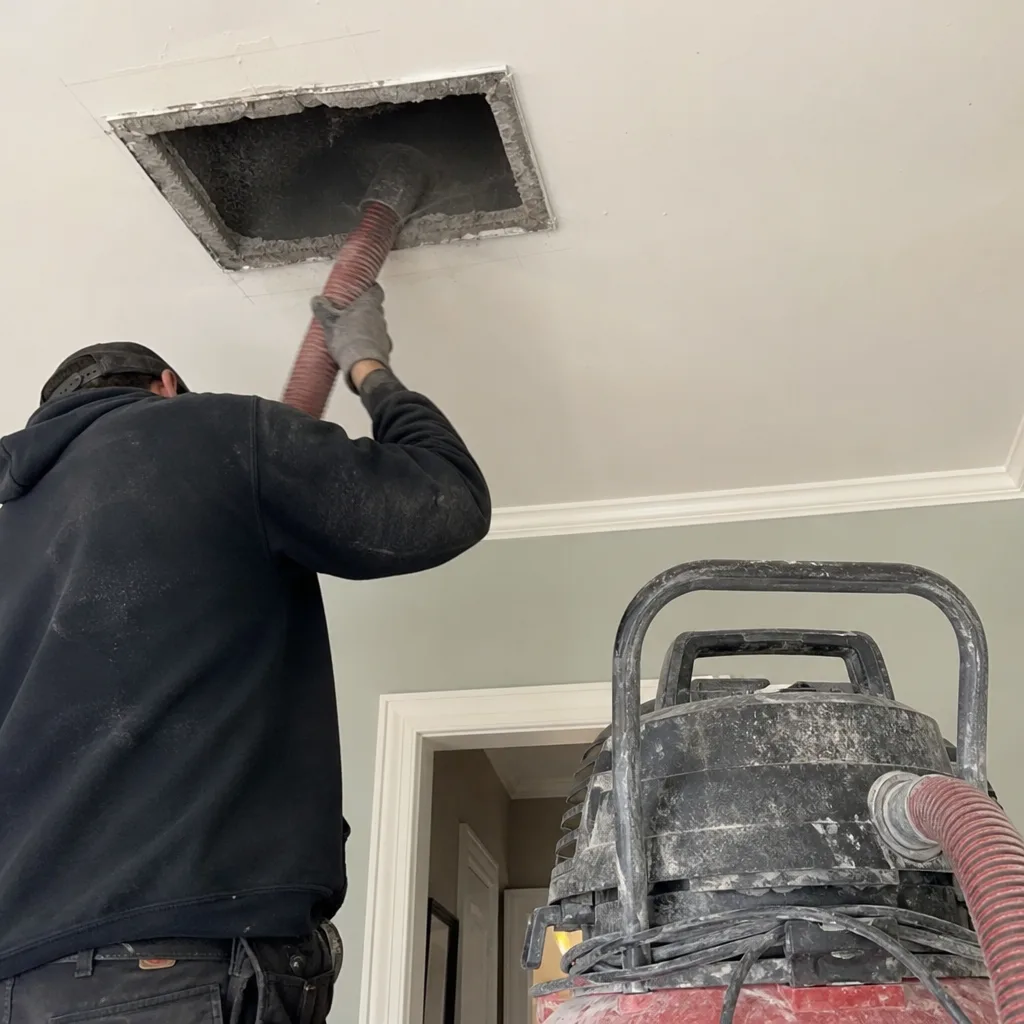 Before
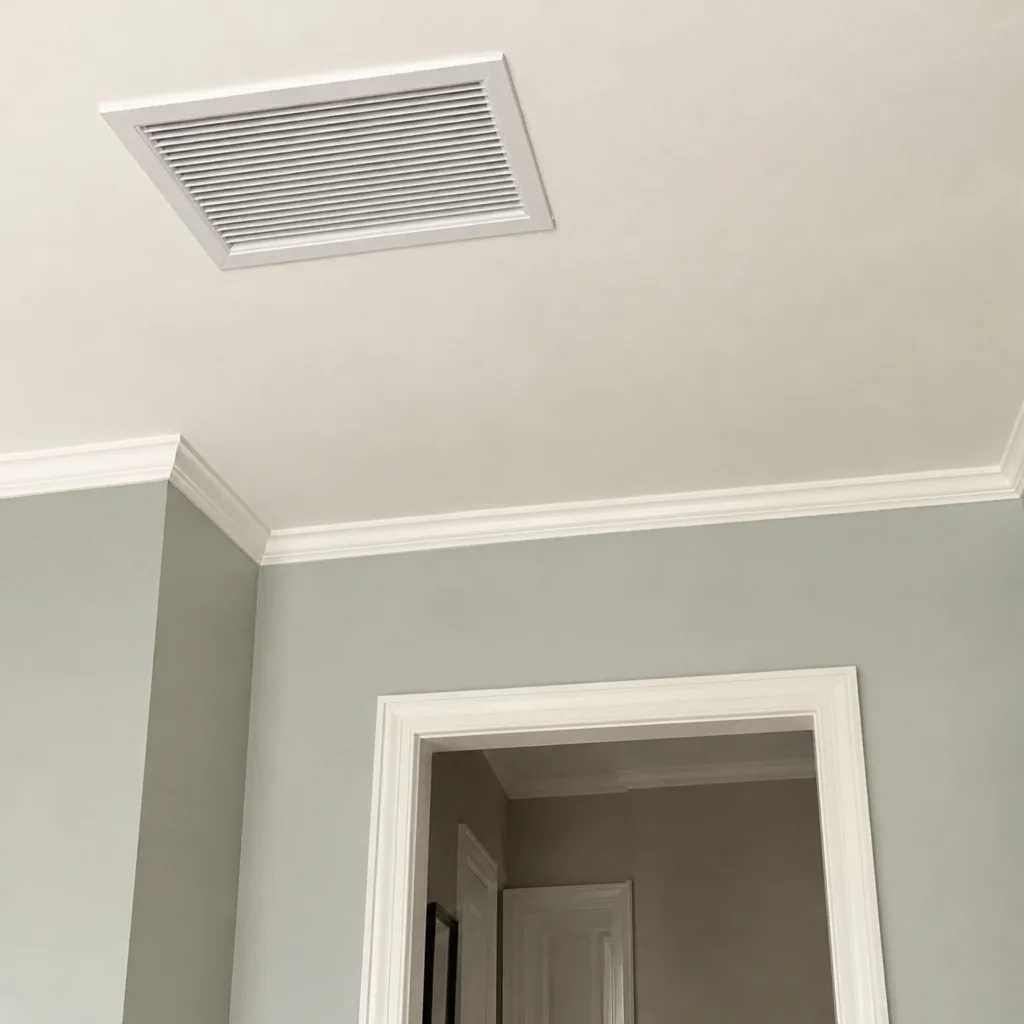 After
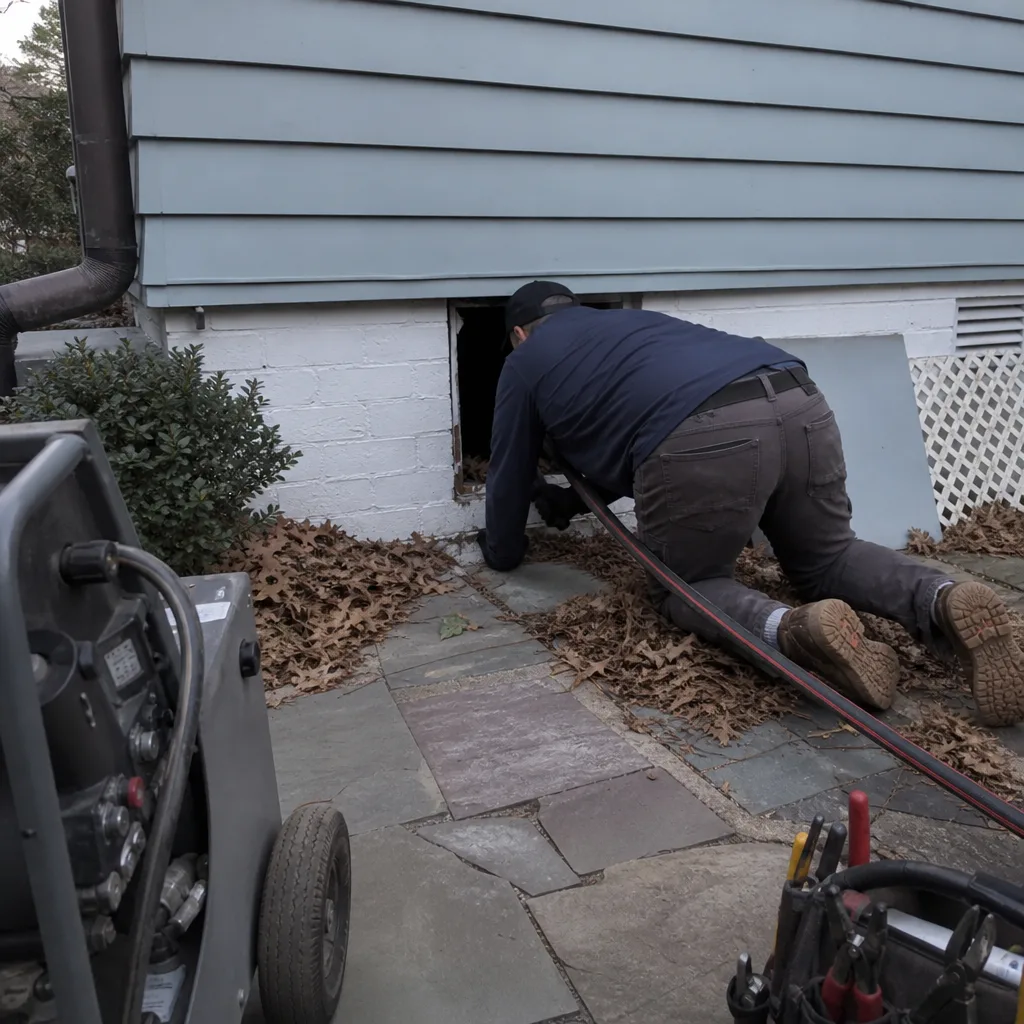 Before
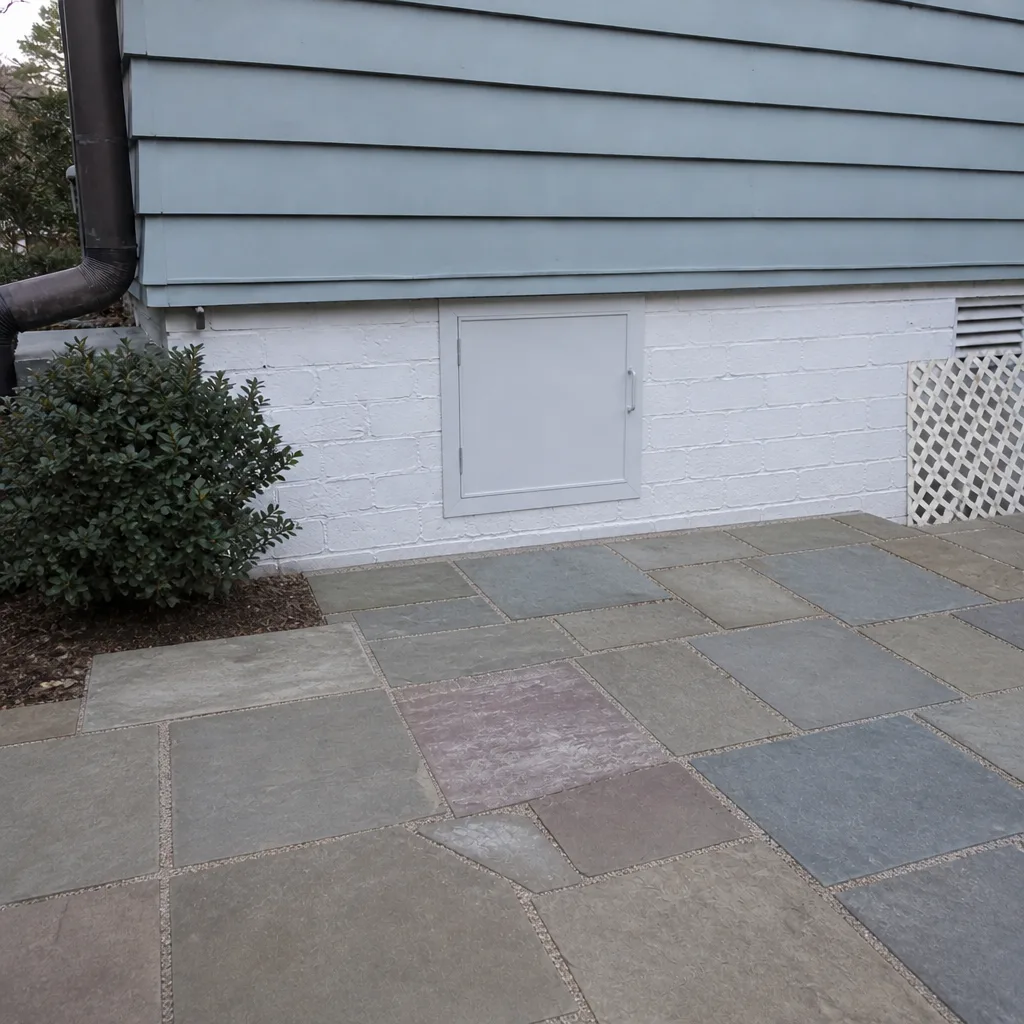 After
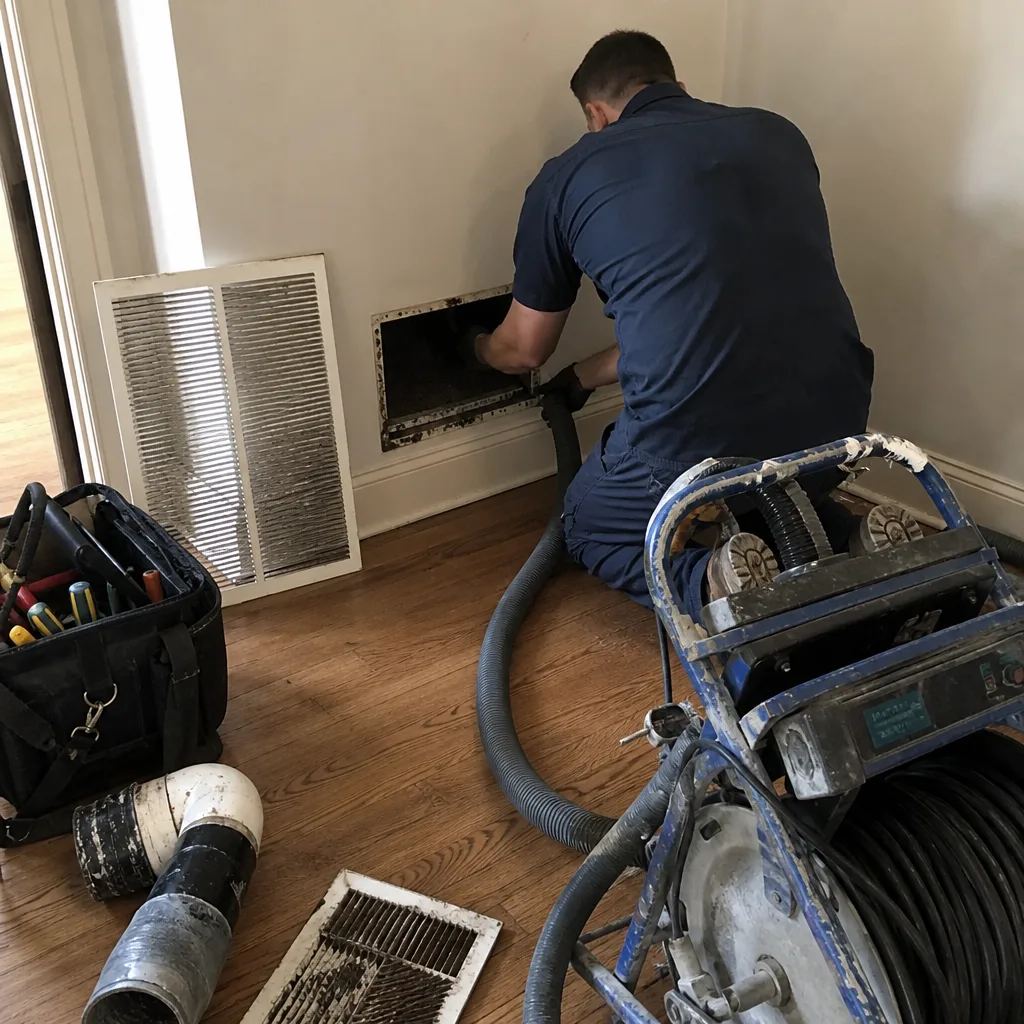 Before
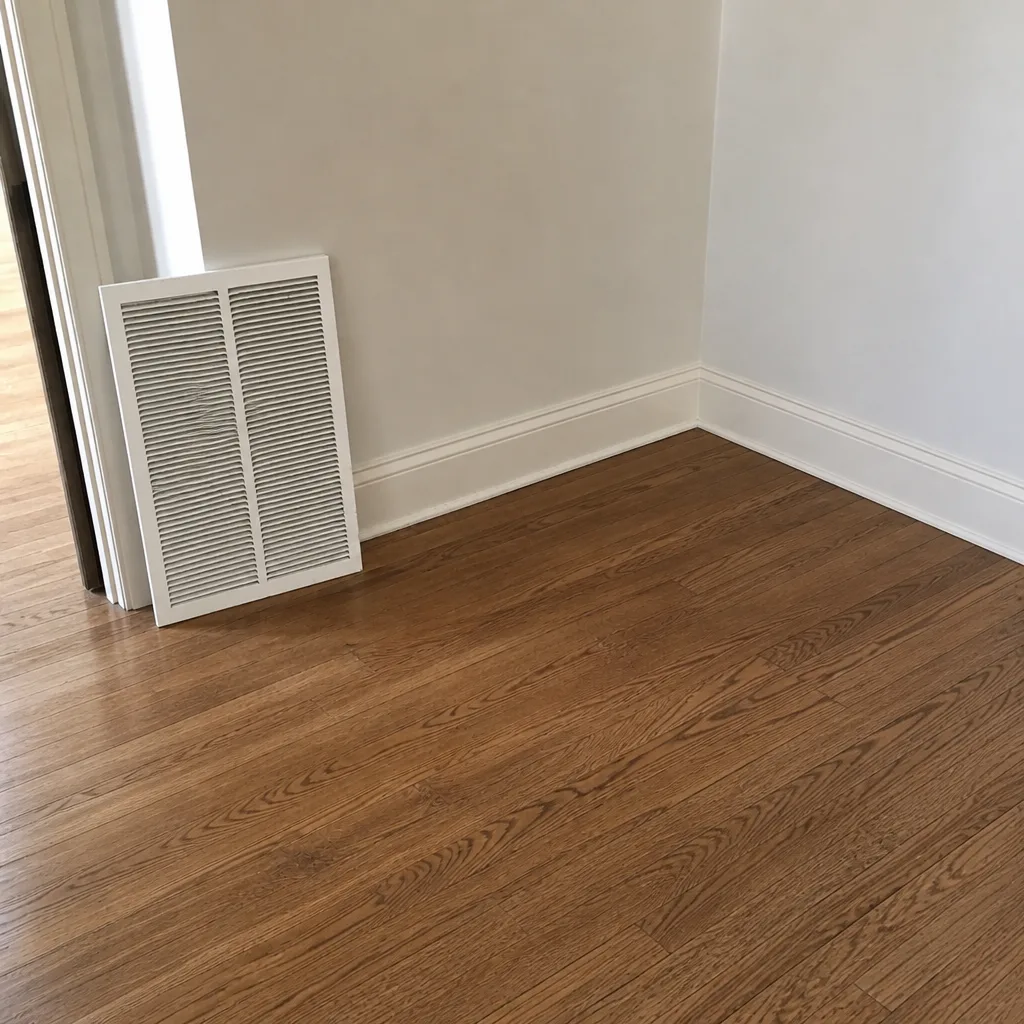 After
Frequently Asked Questions
Whole-system air duct cleaning in Myers Park typically runs in the low hundreds to mid-hundreds depending on the number of registers, the length of runs, and whether the return path or the air handler needs a separate cleaning sequence. The written estimate sets the final price, and the estimate is free. Call (877) 792-5816 for an exact quote.
Cheaper quotes usually reflect cheaper equipment and a shallower touch on the job. A shop-vac and a promise is not the same service as professional-grade extraction from the full air pathway. Ask what equipment will be used on the day of the job, and how many people will actually be on site. Honest ranges beat teaser prices every time. Call (877) 792-5816 with questions about what a job actually involves.
Ask for before-and-after photographs of your own duct interiors, taken during the job. Any company that won’t show you pictures of the ducts they just cleaned is asking you to take their word. We provide before-and-after photos on every cleaning. Call (877) 792-5816 to book an assessment.
Most homes in Myers Park do well on a cleaning every three to five years, with adjustments for renovations, pets, allergy concerns, and recent moves into an older home. Homes that have just been renovated should be cleaned sooner, and homes with persistent odors need assessment before any such schedule applies. Call (877) 792-5816 and we’ll tell you what your situation actually calls for.
Usually not. A brief odor at startup that fades within a minute or two is a normal pattern, especially after long periods of system disuse. A persistent musty or biological smell that continues through the full run cycle is a different matter and calls for professional assessment. Call (877) 792-5816 if the smell is persistent.
You can inspect the accessible portion of your ducts with a flashlight and a phone camera, and this guide walks through how. What you can’t safely inspect is the duct behind wall cavities, the air handler interior, or the coil. That’s technician territory. Call (877) 792-5816 for a professional assessment if your self-inspection turns up anything that concerns you.
Both, and they’re separate services because dryer vents address a different risk. Lint buildup in a dryer vent is a leading cause of residential fires, and a dedicated dryer vent cleaning is worth scheduling even when the air ducts are fine. Call (877) 792-5816 and we can coordinate both.
The Bottom Line
Air duct cleaning warning signs are readable long before the obvious symptoms. Filter loading, room-to-room airflow drift, dust near supply vents, and a faint smell at startup are the early indicators. Visible dust, persistent biological odors, and health patterns that track HVAC run times are late indicators, and by the time those appear the contamination load is usually significant. In a humid Myers Park climate, with older housing stock often carrying ductwork sized for a different generation of HVAC, reading the early signals earns its keep. Filter change is routine. Pattern recognition is what separates a smaller, cheaper intervention from an avoidable bigger one. That’s the whole point of knowing the system rather than reacting to it.
Contact Us
If any of the warning signs in this guide are familiar, the next step is straightforward: a professional assessment and a written estimate before any work begins. Air Duct Cleaning Myers Park connects homeowners with vetted local professionals equipped with Rotobrush and Nikro duct-cleaning systems, and we can walk through the full air pathway in a single visit, including cleaning, sanitizing, duct repair, sealing, and filtration products from Honeywell and Aprilaire. The local pro is licensed and insured as their state requires. Estimates are free. Call (877) 792-5816 and we’ll schedule an assessment. We answer 24/7. Fast dispatch from 7am to 7pm, Sunday through Friday.
Written by the team at Air Duct Cleaning Myers Park.